
In rural Aotearoa, being able to access ACE programmes is a bit of a lottery. If you live in one of the 13 regions that have a REAP you are very well provided for. But if you live in a small town like Thames, with no local REAP, you will probably have to rely on the energy and a commitment of a few people who are prepared to work hard at accessing small grants from organisations like COGS, lotteries and philanthropic trusts. It can be a precarious existence.
A number of years ago the Thames Community Centre did run ACE programmes but by the time the current part-time manager, Jeff Whitfield, arrived in 2018 there was little information about what they were or who funded them. A year before the centre had started a muchneeded driver licence programme. It now delivers two outcomes: legal local drivers, driving safely and ready to get a job – and supported local NGOs.
Everything in the driver licence programme is free.
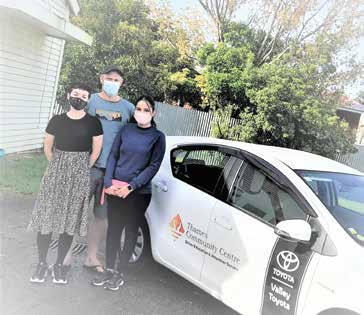
Learners are supported by volunteer mentors, and there’s a donated Valley Toyota that can be used for practical lessons.
The Community Centre will pay for lessons, defensive driving courses and restricted and full licence test fees.
The condition – every learner must agree to give 25 hours of work back to the community.
Jeff says that often people can’t afford to get a licence, or they don’t have access to a car or someone who can teach them:
“Getting a licence this way gives them more confidence and once they have their licence, they have more control over their lives.
“And our programme also helps them become involved in the community. We broker that. They can work in places like the community garden, the op-shop, the SPCA, or the music and drama schools. We go through an interview process because then we can find out about their strengths and their employment goals so we can get them into volunteer work that supports that. And of course they can tell us their preferences. Requiring them to volunteer in the community is a gift back to the community, but it can also support them.
“Once they’ve got the qualification they don’t have to rely on others for transport and they can get a job. Some get their licence in the morning and get a job in the afternoon.
“The volunteers also benefit. They get new skills, meet new people and get more involved in the community.”
Sixty percent of the learners come from schools, so the service helps to reduce the flow of young people driving illegally and prepares them for work. The remaining 40 percent of learners are adults in the community.
Since 2018 the Community Centre has had 150 drivers go through and about the same number of volunteers supporting them.
The learners have given more than 3000 hours to the community. Some have found new passions, like the person who volunteered at the local drama group.
The way most people learn about the programme is word of mouth. Jeff says that in a town of around 7000 that works: “But the centre also has a social media presence and lots of community connections. I identify key people in the community, and they connect with their sub-communities. The radio station also gives us a plug.”
The centre employs only one staff member part-time at the moment but they would like to build its capacity to extend ACE provision and community building services.
“We think it’s a sound model and we get good community outcomes,” says Jeff “but we would like to build our funding base and grow the programme. Once we have some funding, we would have the time and scope to identify other needs. I know they are there. And there are plenty of very talented and knowledgeable people in the community, with a lot of expertise who would want to help.”
Pallavi Kochhar was able to get her driver licence through the Thames Community Centre Programme:
“A friend told me about it. I got my written test four years ago, but no one was willing to teach me. All my family are in India, and my friends were not patient enough, and I was not confident enough!
“My mentor, Hamish was really helpful. Always calm, even when I made mistakes. He made it easy. I knew him a little because he came into the bar where I work.
“My volunteering was at the op-shop. I enjoyed it there, meeting new people.
“I got my restricted licence in March this year, and now I have Residency too. That means I can work on getting into my planned career – in administration and management.”