

About twelve years ago Brian Griffin from Central Plateau REAP started mentoring the men whose partners and babies were being supported by Oranga Tamariki’s Family Start programme. So successful was the service that after a few years other agencies, such as Police and Probation began asking REAP to provide their clients with support – and as the community learned about the programme self-referrals also grew.
Today the REAP’s Rangatahi and Whānau Programme has three parts: male mentoring – inspiring men to think differently; a rangatahi programme for 10–15-year-olds to help them re-engage with education and training; and a Transition to Adulthood Programme for 17 25-year-olds who are leaving care and youth justice and need support so they can thrive as healthy, independent young adults.
The mentors supporting the men or rangatahi engaged in the first two programmes nearly always work with the whole whānau, and that includes responding to those needing support on public holidays when other agencies are closed.
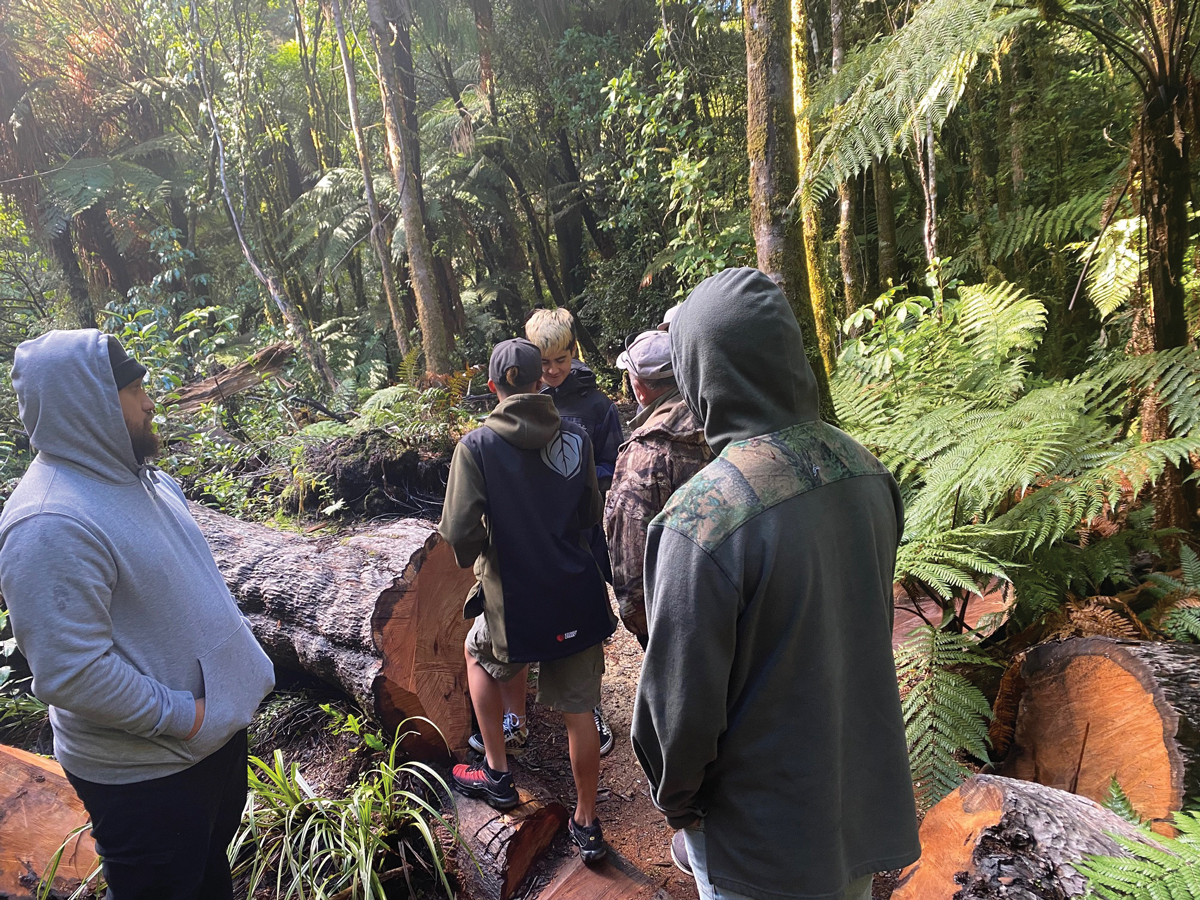
All of the programmes involve taking the men, the rangatahi (some of whom are girls or young women) and the whānau to wānanga in the natural world – where they feel comfortable, where they can open up and learn, where they can connect to tikanga and whakapapa.
The Rangatahi and Whānau Programme is open to everybody. It just so happens, says Brian, that Māori are the main ones in their community who are seeking help and they do make up about 90 percent of those on the programme.
 The only group that has classroom learning are tamariki and the rangatahi under 16, who are enrolled with Te Aho o Te Kura Pounamu, the Correspondence School, and learn with the support of a qualified teacher. Many of these children have not been attending school, so they can be helped to restart their learning at the point they left off, or, if school is not for them, they get the literacy and basic life skills they need before they are helped into employment or training.
Everyone starts with one-on-one sessions with their mentor.
“We talk about a lot of stuff, says Brian. Things that have happened in their lives. Things that upset them, that gets them into a space where they bottle things up. We work through this stuff and get it out into the open.
“We build up a relationship, usually through kai. We take them to MacDonalds or a café, getting them into a comfortable space where they can talk.
“Most of them are living day by day. They may have no goal or plan for their life. We try and help them with that, helping them see this is where they could go, what they could be. We break the goals down into smaller goals, so we can celebrate success.
“We’ve helped a few rangatahi get into the army by sending them to Limited Service Volunteers in Christchurch, where they get a six week life skills programme and learn how to conduct themselves in a job interview, and do a cv. When they come back, we help them into work.
“A lot want to be builders or engineers. We can help them see that they can actually do it.
“Most of them have no idea how to manage their money, so we help them with that, and we try and get them into good habits like getting up in the morning and going for a run. Or if they have to go to an interview, getting them into a suit. They have an amazing reaction, when you put a young man into a suit. It really can be big for the boys.
“The really easy ones to work with are the self-referred. About a quarter are self-referred. They want help. But our overall success rate is about 70 percent. We take reaching the first small goals as success. We have to treasure small gains. We keep working with them on the next small goal.
“For many the wānanga are the turning point. We challenge the older ones to step up and be a leader and take younger ones under their wing. We get them into pairs to work together. A lot of them have never done anything like fishing before – or been into the bush. Never put a hāngī down. We encourage the rangatahi to talk with their grandparents and learn more about their culture.
“Working with the whole whānau means that we can sit down together and work things out so they can work together as a family. We take them under our wing and mentor the whole lot. They learn to plan and set goals individually and together.
“It’s great too when we can help them celebrate things like birthdays and organise big parties. Helping them do things they have missed out on.”
Last year Harriet Shaw-Puha was appointed Rangatahi and Whānau Coordinator. She works part time, providing compliance oversight for the busy mentors, identifying gaps and supporting safe practice. This position provides her with an overview of the whole programme:
“Our mentors are all working with high risk rangatahi and whānau and so I think our biggest achievement is engagement. Other services generally have not been able to engage with them.
“Outcomes are sometimes difficult to measure but for the rangatahi our main one is no more police involvement. And that’s the feedback we get from the Police themselves and Oranga Tamariki.
“And it does all come back to our whole whānau approach. If you try and work individually it is hard for rangatahi, and the men, to move forward with their goals. They need to be supportive of each other and see that there is a different way of living. That there is hope out there.
“Certainly the wānanga is an important connection point, connecting them to whakapapa and finding a more positive side to their family, rather than all the negatives. It is transformational, and they put a lot of work into it.”
Roana Bennet, who is the REAP’s General Manger, says that there are plans to get a separate space as soon as possible: “A new venue established specifically for rangatahi would enable rangatahi to flourish in both their learning and their well-being. We are actively seeking partners to help us achieve this goal.”