
ACE Conference 2026
Ako (Workshop) Facilitators
The 2026 workshop programme is led by practitioners who apply AI in real educational contexts across Aotearoa and beyond. Each facilitator brings hands-on expertise to sessions designed for immediate use in your practice – from lesson planning and learner feedback to data sovereignty, accessibility and ethical AI governance.
These are working sessions. Bring your laptop and charger.
Click here for the Ako Sessions schedule.
Meet our facilitators:
- Steven Renata. Kiwa Digital
- Paula Gair, AcademyEX
- Robbie Guevara (ICAE) and Leone Wheeler (ALCN)
- Lara Draper, Deaf Aotearoa
- Carla Teng-Westergaard, Broadcoast Journalist and Media Adviser
- Dr Jia Rong Yap, English Language Partners New Zealand
- Jam Mayer, Selwyn Community College
- Dr Cherie Chu-Fuluifaga and Helen Lomax, Research in ACE
- Dr Rosie Gallen, Powerdigm Associate
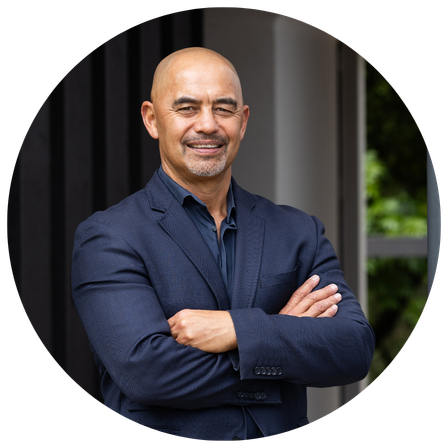 Steven Renata
Ngāpuhi, Ngāti Pakahi
Kiwa Digital
Steven Renata, born in the small township of Kawakawa in the far northern region of Aotearoa New Zealand, and raised in Milton in the deep south, takes pride in his diverse heritage of Māori and Pākehā (Scottish and Irish). Among the first Māori graduates of the University of Otago, Steven earned his master’s degree in marketing in 1994. His career began in Māori tourism at AUT, eventually leading him to co-found the global fitness company Les Mills International.
Currently, Steven serves as Kaiwhakahaere Matua Managing Director and co-owner of KIWA Digital, a world-renowned Māori-led creative cultural agency. KIWA Digital leverages technology to authentically amplify global voices, utilising its pioneering software, VoiceQ, for dubbing acclaimed hits such as Netflix’s Squid Game, Amazon Prime’s My Fault / ‘Culpa mia’, Disney’s Moana, The Lion King, Frozen and Encanto in reo Māori; HULU’s Prey in Comanche, Marvel's The Avengers in Lakota, A-Grade games such as The Witcher: Wild Hunt and Cyberpunk 2077, PlayStation 5 titles such as Ratchet and Clank Rift Apart, Lego Star Wars and Horizon Forbidden West. Its sister software, QutPro, has significantly enhanced cultural capability across New Zealand’s public and private sectors.
Steven is dedicated to steering KIWA Digital’s strategic direction and success. He is advocate of tribal leadership values, focusing on language and relationships to drive sustainable performance. This approach ensures the delivery of high-quality content amidst an industry experiencing significant digital disruption and technology advancements. Under his leadership, KIWA has shifted from traditional physical distribution to specializing in creative cultural services and post-production.
Recognized for his influence, Steven was voted one of the top 10 most influential people in the global localization sector by the Entertainment Globalization Association in 2021. In 2022, KIWA received the prestigious He Kai Kei Aku Ringa Award for Māori Excellence in Export, and Steven was honoured with the Minister of Defence Award of Excellence Special Award Kotahitanga (Unity). In 2023, he was awarded the Matahiko Totara Award for his decade-long service to New Zealand’s public sector.
Steven currently resides in Auckland, New Zealand, with his whānau, where he enjoys cycling, music, food, viticulture and travel.
Workshop: CultureQ | Technology innovations supporting Indigenous communities
CultureQ is a secure software platform built for Indigenous communities to store, protect, and revitalise language, stories, images, artefacts, and other cultural knowledge. It is designed as a culturally governed digital space where communities can control access through their own protocols and use ethically built AI tools to engage with their collections while retaining authority over how that knowledge is managed and shared.
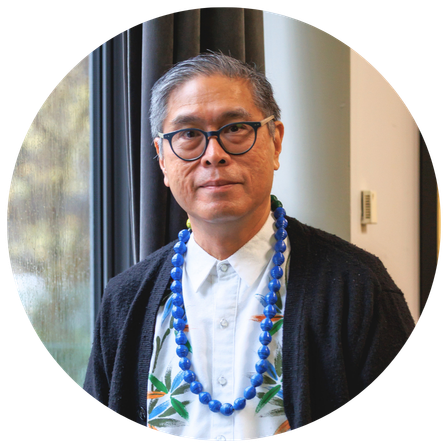 Jose "Robbie" Roberto Guevara, PhD
President, International Council for Adult Education (ICAE)
Robbie Guevara returns to the 2026 ACE Conference having previously proposed an AI Diamond Framework, which placed Adaptive Intelligence at the centre of engagement with Ancestral, Artificial, Andragogical and Academic Intelligences. That framework has since evolved into a Star Framework, with the addition of Advocacy Intelligence — reflecting the understanding that adult educators must not only learn to use and engage with AI, but recognise that those very processes of engagement are themselves acts of learning and advocacy. Robbie will also share recent global and regional developments related to the conference theme.
Leone Wheeler
Honorary CEO, Australian Learning Communities Network Inc (ALCN)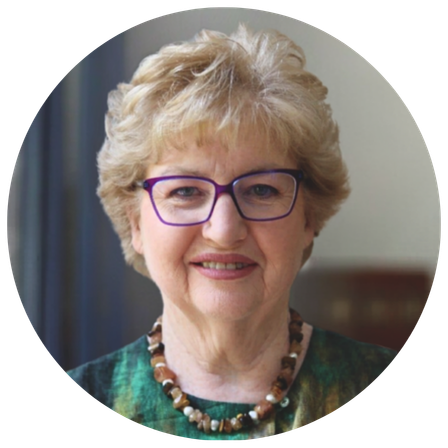
Leone Wheeler will share experiences of learning communities in Australia and their engagement with AI and digital learning. The ALCN is a not-for-profit organisation representing a national network of practitioners building sustainable communities through learning. Its members include all five Australian UNESCO Global Network of Learning City members: the City of Canning (Western Australia), Circular Head Council (Tasmania), the City of Melton (Victoria), the City of Wollongong (New South Wales), and Wyndham City Council (Victoria). The ALCN is also preparing to help organise the ASEAN+4 Learning Cities Conference in November in Ho Chi Minh City, Vietnam, with the tentative theme of "Digital Transformation for Smart, Sustainable and Inclusive Learning Cities."
Leone has contributed to the development of UNESCO learning cities across Australasia, Qatar, and internationally, and has served on the international jury reviewing membership applications to UNESCO's Global Network of Learning Cities on three occasions (2021, 2023 and 2025). Leone also coordinates the Connecting Urban and Rural Learning Initiatives Network for the PASCAL International Observatory, examining the distinctive learning needs of rural, regional and remote communities and how a learning city approach can support inclusive learning and sustainable community development.
Workshop: AI and Digital Literacy: Feeling lost? Remember that we make the road by walking – together
Workshop objectives:
- To REFLECT on our questions about the implications of AI and Digital Learning to us as adult educators
- To SHARE current efforts of engaging educators and communities in AI and Digital Learning
- To ACT at individual, local and global levels, harvesting ideas from the conference.
Workshop description:
A key education philosophy of Paulo Freire is that as educators, "we make the road by walking". This philosophy is more relevant now, when we find ourselves as educators "feeling lost" in situations, like the rapid emergence of AI, and realise that there is no pre-existing path to follow.
Be assured that you are not alone. Many of us in the adult education community share this feeling of being anxious about the impact of AI on ourselves as learners, our work as educators, and our communities.
Let us be comforted by the thought that, we have together created many learning pathways before across similar periods of uncertainty. Our strength and confidence come from knowing that these new and emergent pathways will need to be created by walking alongside each other - through action, experience and critical reflection.
Join us for a roundtable conversation. Bring your questions and experiences into a space where we can together share and explore the implications of AI and Digital Literacy for us as adult educators.

Paula Gair
AcademyEX
Paula Gair has extensive international experience as a consultant, innovator, speaker, advisor and educator related to the safe, responsible and ethical use of technology. She has supported the digital transformations of large international NGOʼs and businesses over 15 years; living and working across 10 countries in Asia, Europe and the Americas before returning home to Aotearoa New Zealand.
Paula conducted Masters research on cyber and privacy risks and mitigation strategies for non-technical audiences, which included a focus on applying insights from behavioural science for families and SMEs. She maintains an active interest in cybersecurity, privacy and online harm reduction.
She is currently focused on how AI can enhance our capabilities personally and professionally, with a specific focus on education and innovation alongside effective AI governance and its responsible use, ethics and safety. Paula also supervises and teaches postgraduate students at AcademyEX, alongside mentoring and supporting innovators and entrepreneurs.
Workshop: Safe, Ethical and Responsible AI Use in Education in Aotearoa New Zealand
Artificial Intelligence is already impacting us all and it has the potential to transform Adult and Community Education. We will explore ways to work with AI tools in teaching and learning with an emphasis on effective prompting and evaluation, to ensure safe, ethical and responsible AI use. In this interactive workshop you will experiment with (free) AI tools; utilising real use cases such as research, planning, resource creation, policy and writing. We will also explore issues such as bias, hallucination, a human-in-the-loop approach and the importance of data governance and data sovereignty. The workshop will focus on building foundational AI capability and confidence, and you will develop practical skills to produce and evaluate AI outputs in your own context.
Post workshop resources will be shared to enable participants to continue their AI journey.
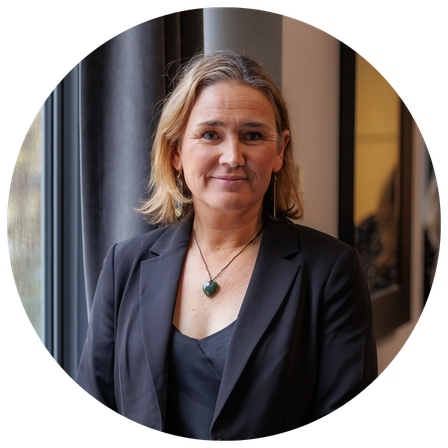 Lara Draper
Deaf Aotearoa
Lara Draper is a passionate advocate for Deaf rights and a proud member of the Deaf community. She communicates using New Zealand Sign Language (NZSL) and brings lived experience to her leadership role at Deaf Aotearoa, a national non-profit and Disabled Persons’ Organisation (DPO).
In her role, Lara oversees Hauora and Employment services and leads the nationwide Adult Community Education (ACE) programme, working to improve access, equity, and opportunities for Deaf adults and seniors across Aotearoa.
Lara has extensive experience delivering Deaf awareness and sign language education in both the UK and New Zealand. She regularly presents on key Deaf issues at conferences and has presented internationally, including at the World Federation of the Deaf (WFD).
Deaf Aotearoa is a founding member of the international SLxAI Summit, held in April in Boston, USA, reflecting Lara’s strong interest in the intersection of sign language and artificial intelligence. She is particularly focused on how Deaf people can help shape AI technologies – such as sign language translation and accessibility tools – to ensure they are inclusive, culturally grounded, and aligned with Deaf values, history, and NZSL.
Workshop: NZSL, Deaf Learners and AI: Building Educator Confidence
This will be an introductory, beginner-friendly workshop designed for ACE educators who may have no previous experience teaching Deaf learners or using AI. The session will offer a high-level overview of Deaf people, New Zealand Sign Language (NZSL), and current conversations around AI and accessibility. The main focus will be on building confidence, understanding our responsibilities, and supporting informed decision-making, rather than delving into technical skills or specific tools. The interactive elements are intentionally light and supportive, so there’s no expectation of prior NZSL knowledge or AI experience.
 Carla Teng-Westergaard
 Broadcast Journalist and Media Adviser
Carla is a Filipino broadcast journalist with 17 years of experience in media, public relations, and strategic communications. She began her television career in the Philippines as a reporter, presenter, and host with networks including TV5 Network Inc, Bloomberg TV Philippines, GMA Network, and UNTV. She later served as chief editor at the Office of the President of the Philippines, under the Presidential Communications Office. A Manaaki New Zealand Scholar alumna, Carla now works as a media adviser for the Asia Media Centre in Auckland, producing journalism focused on Asia–New Zealand relations. She is also an Asia-Pacific fellow of the JournalismAI Academy at POLIS, London School of Economics, supported by the Google News Initiative.
Workshop: AI for Storytellers – A Practical Media Toolkit
Carla's session bridges practical media experience with AI tools to sharpen the way you communicate your work. Through live demonstrations and a hands-on sandpit session, you will learn how to use AI to build story pitches that meet modern media standards, guide AI past generic output to produce clear and professional messaging, and apply ethical checks so you stay in control of accuracy and tone.
You will leave with a practical toolkit of go-to prompts and a drafted pitch ready to share.
What the session covers:
- How machine learning is already being used in newsrooms and what that means for the way you pitch
- Which generative AI tools work best for media and communications tasks
- The briefing method: how to give AI the right instructions so it does not give you generic output
- A hands-on sandpit where you draft a real pitch using your own device
- Group review of AI drafts through a professional editorial lens
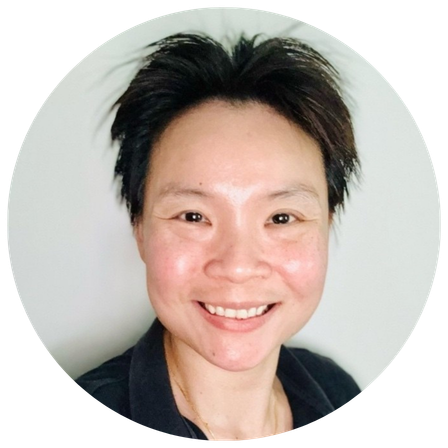 Dr Jia Rong Yap
English Language Partners New Zealand
Jia Rong Yap is Centre Manager at English Language Partners Rotorua and an AI Project Advisor for English Language Partners New Zealand. Her work focuses on the ethical and pedagogically grounded integration of generative AI in adult ESOL education, particularly for learners with low L2 literacy. Jia Rong leads national professional development workshops that support teachers in using AI tools such as ChatGPT to design effective learning experiences while maintaining strong foundations in second language acquisition research. She holds a B.Ed (Hons) and an M.Ed (ESL) from the University of Malaya, and a PhD in Literacy Education from the University of Waikato. Outside of work, she enjoys reading about human psychology and personal development.
Workshop: AI for Enhanced Teaching: The ELPNZ Approach to Ethical Generative AI in Adult ESOL
Artificial intelligence is rapidly entering education, yet many Adult and Community Education practitioners are still exploring how it can be used in ways that genuinely support teaching and learning. This session shares insights from the AI for Enhanced Teaching project at English Language Partners New Zealand, which explores how generative AI can be introduced responsibly into adult ESOL programmes.
Drawing on professional development workshops and classroom experimentation with ESOL teachers, the project focuses on practical ways educators can use tools such as ChatGPT to support lesson planning, develop accessible learning materials, and personalise learning for migrant and multilingual learners, including those with limited literacy.
The session will share key lessons from the project, including opportunities, challenges, and practical examples from teachers. For ACE practitioners working in community-based contexts with diverse learners and limited resources, the session offers realistic strategies for exploring AI while keeping pedagogy, equity, and learner needs at the centre.
This workshop is fit for educators, tutors, private tertiary education providers.
 Jam Mayer
Selwyn Community Education
With two decades in digital strategy and a background in tertiary teaching, Jam Mayer trains teams and business owners in practical AI automation and workflow design.
She builds what she teaches: multi-agent workflows, automation systems, and AI tools for real contexts across Aotearoa. Jam is running two workshops at the conference.
The first focuses on using free AI tools – including NotebookLM and Claude – for lesson planning and content creation. The second tackles the admin side of teaching: reports, learner feedback, and repetitive written tasks. Both sessions are hands-on, with prompts and workflows you can apply the following week.
Workshop 1: AI Tools for Lesson Planning and Content Creation
Rather than starting from scratch every time, tutors can use AI as a creative thinking partner that adapts content for specific learners. This hands-on session explores how free AI tools, including NotebookLM and Claude, can transform the way tutors plan lessons and create learning materials.
You'll leave able to:
- Use NotebookLM to generate summaries, study guides and lesson outlines from your existing course materials
- Apply practical prompting techniques to create differentiated content for diverse adult learners
- Critically evaluate AI-generated materials for accuracy and relevance
- Build a simple, repeatable content creation workflow you can use immediately
Workshop 2: AI for Tutor Admin, Reports and Feedback
The part of teaching taking up too much of our time: the admin. This practical session tackles the written tasks that eat into teaching time – reports, learner feedback and emails. Participants will work through real tutor admin scenarios using free AI tools and leave with prompts and workflows ready to use the following week.
You'll leave able to:
- Draft reports and learner feedback faster using AI prompting techniques
- Use free AI tools to handle repetitive written tasks
- Critically evaluate AI outputs for tone, accuracy, and appropriateness
- Identify at least three admin tasks in your own practice where AI could save time
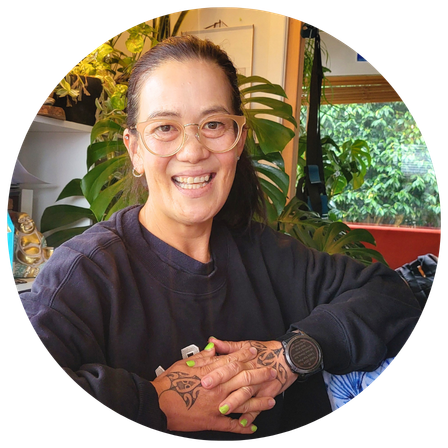 Dr Cherie Chu-Fuluifaga
Associate Professor, Te Herenga Waka Victoria University of Wellington
Dr Cherie is an Associate Professor at Te Herenga Waka—Victoria University of Wellington and a Pacific education researcher whose work focuses on relational leadership, mentoring and community-engaged learning. Her research centres on strengthening Pacific participation, belonging and success in education through culturally grounded approaches that value community knowledge and collective wisdom.
Cherie works closely with educators, leaders and community organisations to design learning frameworks, mentoring initiatives and professional development programmes that support inclusive and responsive education systems.
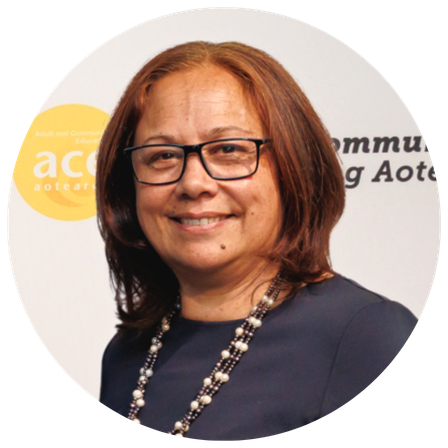 Helen Lomax
Tertiary Education Leader
Helen Lomax is a respected tertiary education leader with extensive experience in teaching, learning and capability development across Aotearoa New Zealand and internationally. Over the past decade, she served in multiple roles at Ako Aotearoa, including Deputy Director Sector Services, Director and Senior Strategic Advisor, leading national initiatives to strengthen educational quality and educator practice.
Helen has held senior leadership and academic roles, with expertise in strategy, programme design and stakeholder engagement. Her work focuses on inclusive, culturally responsive practice and building organisational capability, partnering widely with providers, government and communities to support system-wide improvement.
Workshop: Rooted in Ancestral Knowledge – Research in ACE
Dr Cherie Chu-Fuluifaga and Helen Lomax will share findings on how ancestral intelligence – relational learning, community knowledge and intergenerational wisdom – is shaping practice across the sector.
Circles of Knowledge: Learning Through Community and Relationship
By Dr Cherie Chu-Fuluifaga
This presentation shares insights from the Circles of Knowledge project, which explores how Adult and Community Education (ACE) providers create spaces where community knowledge, lived experience, and relational learning are recognised as powerful sources of education.
Drawing on work with ACE communities, the project examines how circles of dialogue, shared reflection, and collective inquiry support learning that is grounded in trust, reciprocity, and community connection. These circles function not simply as discussion spaces, but as environments where knowledge is co-constructed, identities are affirmed, and learners and educators grow alongside one another.
The presentation will explore how Circles of Knowledge reflect forms of ancestral intelligence, where learning is informed by intergenerational wisdom, cultural values, and the experiences of communities. It will highlight practical examples from ACE settings and discuss how relational approaches to learning can strengthen belonging, confidence, and community capability.
Reconnecting Through Craft: Ancestral Intelligence in Men's Sheds New Zealand
By Helen Lomax
This workshop introduces a PhD project exploring Men's Sheds New Zealand as spaces of learning, wellbeing, and connection in Aotearoa New Zealand. It reframes Men’s Sheds as environments where ancestral intelligence, intergenerational knowledge, values, and ways of being is shared through craft, storytelling, and mentoring through whānau, hapū and iwi.
Drawing on indigenous and community insights and perspectives of whānau hapū iwi on whānau ora, the research seeks to highlight how these settings might foster belonging, dignity and resilience among men. Participants will engage with early insights and reflect on how adult and community education can better recognise and integrate ancestral intelligence to strengthen culturally grounded, community-led learning practices.
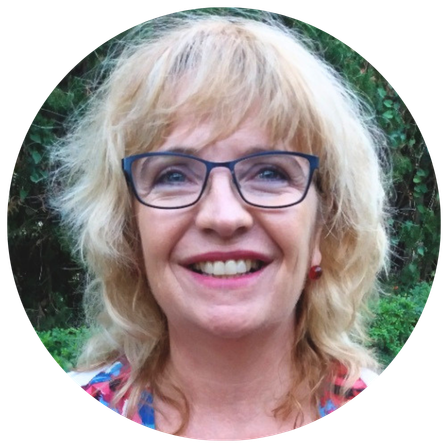 Dr Rosie Gallen
Powerdigm Associate, Practitioner and Scholar
Dr Rosie Gallen is a practitioner-scholar and consultant with more than 25 years' experience across government, public housing, community development and the wider sector. Her work focuses on social impact, Theory of Change, evaluation, engagement and community-led change. Rosie completed her PhD in Public Health at Massey University in 2025, exploring how practitioners build trust, care and wellbeing within complex public systems. Through Powerdigm, the consultancy arm of Inspiring Communities, she supports organisations and peak bodies to develop practical impact approaches, defensible indicators and clearer stories of change.
She is currently working with ACE Aotearoa on its Theory of Change and impact approach for the adult and community education sector.
Workshop: Tūhono Impact: Simple, Shared Ways to Show
the Difference We Make
A participatory workshop designed to help ACE practitioners develop shared, practical, low-burden ways to notice, measure and communicate their impact.
This session draws on what providers told ACE Aotearoa in a recent pulse check – about connection, confidence, participation and the need for any shared approach to stay simple and useful. Rather than introducing a new reporting system, the workshop tests a small set of shared signs of change and explores practical ways providers can gather evidence they may already have: attendance patterns, learner comments, tutor observations, stories, photos and short check-ins.
Participants work through a worksheet applying the approach to a real learning activity from their own setting, with the aim of leaving with one practical next step rather than a full new framework. The session also gives ACE Aotearoa a chance to hear directly from providers about what feels realistic, what feels too hard and what support would help if this approach develops further.
This session is designed for Adult and Community Education providers who want simple, realistic ways to notice and show the difference their work makes. It is especially useful for smaller providers, though the approach can be adapted across different settings.