
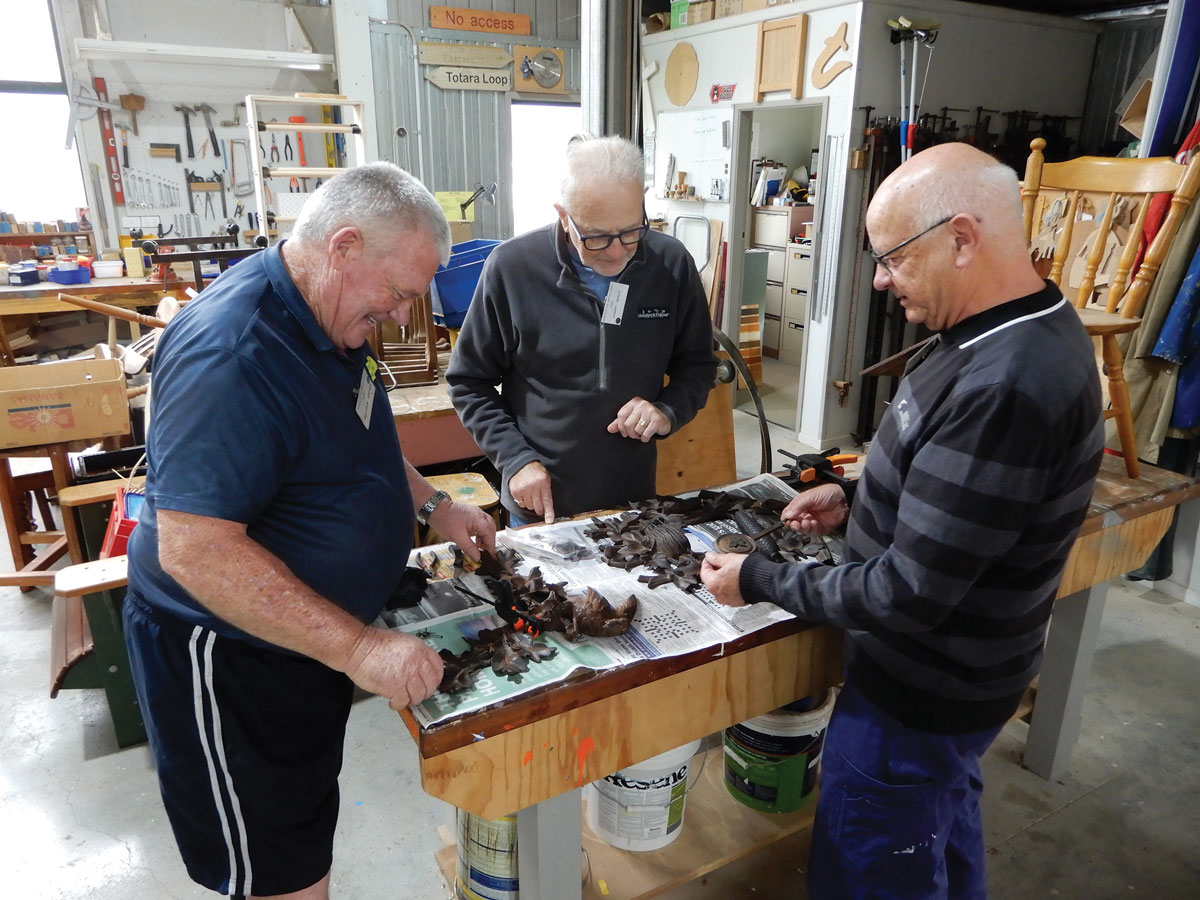
Men’s Sheds have become an important part of the adult and community education landscape across Aotearoa New Zealand. Supported nationally by MENZSHED New Zealand, more than 130 Sheds operate as practical learning spaces where mainly older men can meet, share skills, and stay connected to their communities. While they are often associated with woodworking or repair projects, Sheds are also places of informal learning, mentoring, and community service. Members exchange knowledge, learn new skills, and contribute to local projects in a way that is accessible and welcoming. To put it in a rather large nutshell, a shed brings men together in one community space to share their skills, have a laugh, and work on practical tasks individually (personal projects) or as a group (for the shed or community).
In addition, Sheds have hosted Men’s Health Expos at which significant numbers of health checks were completed, and several major health issues were identified among participants.
Research into Men’s Sheds was undertaken by Emeritus Professor Edwina Pio and funded by The Selwyn Foundation in 2025. The research investigated the health and wellbeing impact of Men’s Sheds on their members in New Zealand with results published in June 2025.
Using surveys, focus groups, and interviews across several Sheds, the study found that membership was linked to a clear reduction in loneliness and improved wellbeing. Before joining a Shed, 29 men in the study recorded high loneliness scores; after joining, this reduced to eight. Many participants described the Shed as providing routine, friendship, and a sense of purpose. Activities ranged from woodworking and metalwork to cooking, mentoring, and intergenerational projects with schools. These findings reinforce the role Sheds play as informal education environments that support lifelong learning and social connection.
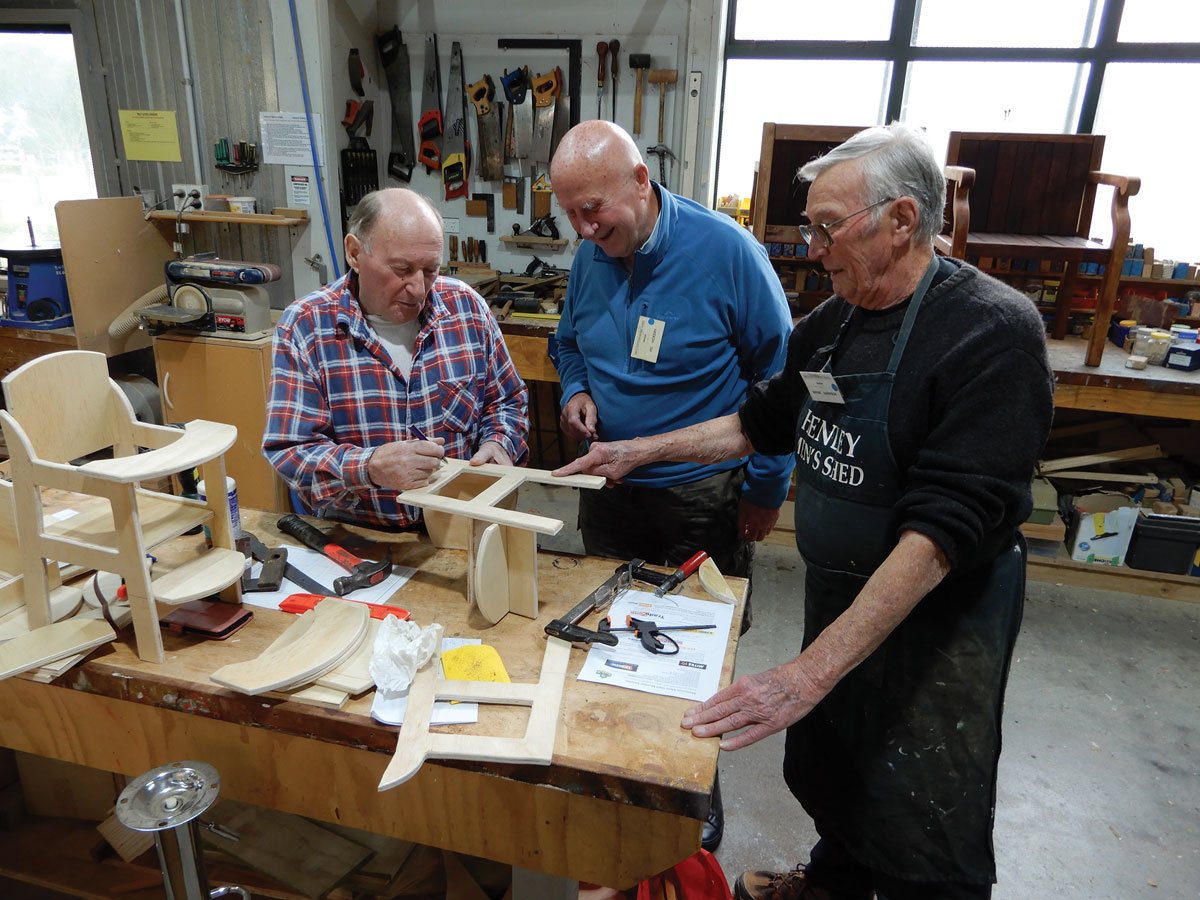 For the adult and community education sector, Men’s Sheds show how learning can take place outside formal classrooms. They provide practical pathways for skill sharing, peer learning, and community participation, especially for people who may not engage with traditional education programmes. They also demonstrate the value of partnership between community groups, local councils, health providers, and education organisations. In many communities, Sheds work alongside libraries, training providers, and community health services to reach people who might otherwise be isolated.
The research also highlighted areas for future development. Sustainable funding, including paid management roles, was identified as important for long-term stability. The report recommends encouraging participation from under-represented groups, including Māori, Pasifika, migrants, and men from a wider range of work backgrounds. Some Sheds are already exploring new technologies and broadening their programmes, showing how these spaces can continue to evolve as centres of practical learning.
For those involved in adult and community education, Men’s Sheds offer a useful example of how local initiatives can support wellbeing, build skills, and strengthen community connections. Their success reflects simple principles: shared purpose, accessible learning, and strong community partnerships.
Reference
Pio, E. (2025). Researching the health and wellbeing impact of Men’s Sheds on their members in New Zealand. Auckland, New Zealand: The Selwyn Foundation. ISBN 978-0-473-74852-4 (PDF)