
Admitting to literacy issues and then seeking assistance can be hard for learners, with many uncomfortable about sharing their learning difficulties. People with literacy issues do not seek help for many reasons, including embarrassment, and sometimes being unwilling to tell people about their problem. That’s why it was great to see Jay Blades, presenter of TV’s The Repair Shop, recently go public with his reading difficulties. Jay left school with no qualifications and he’s not alone in facing this issue. A research report published by The Education Hub in 2022 revealed that by the age of 15, 35.4 percent of teenagers struggled to read and write, and since the late 2000s, the performance of New Zealand students in international standardised tests measuring numeracy, literacy and science performance has steadily declined. Jay chose to share his learning journey on a BBC documentary where he started to learn to read, working with a charity that organises volunteer coaches to work one-to-one with readers.
Jay’s journey and public announcement were mirrored by stories in our media about Michael King Potiki from Invercargill.
Michael, an Invercargill council worker, says a desire to read to his grandchildren inspired him to put his hand up, admit he could not read and begin his learning journey in his late 50s. Three years after starting that journey, the former farm manager has written a book – A Journey Towards Literacy.
Michael chose to work with the Rural Youth and Adult Literacy Trust (previously the Adult Literacy Rural Trust), a nonprofit organisation that assists adults and teenagers living in rural areas with literacy and numeracy. Tuition is free through the Trust and tutors coach over the phone or Skype. Learners and tutors work together, usually five days a week for up to 30 minutes a time.
Like many adults who struggle with literacy, Michael had a range of tricks to hide the fact he could not read. “I used to tell a lot of white lies to people. I would say I didn’t have time to read something, or I didn’t have my glasses with me.” Meanwhile, Michael’s wife Margaret did the farm paperwork. And it was Margaret’s actions that finally pushed Michael to learn to read.
“After watching my grandchildren getting read to by my wife, I thought, ‘I want to be able to do that’,” Michael says.
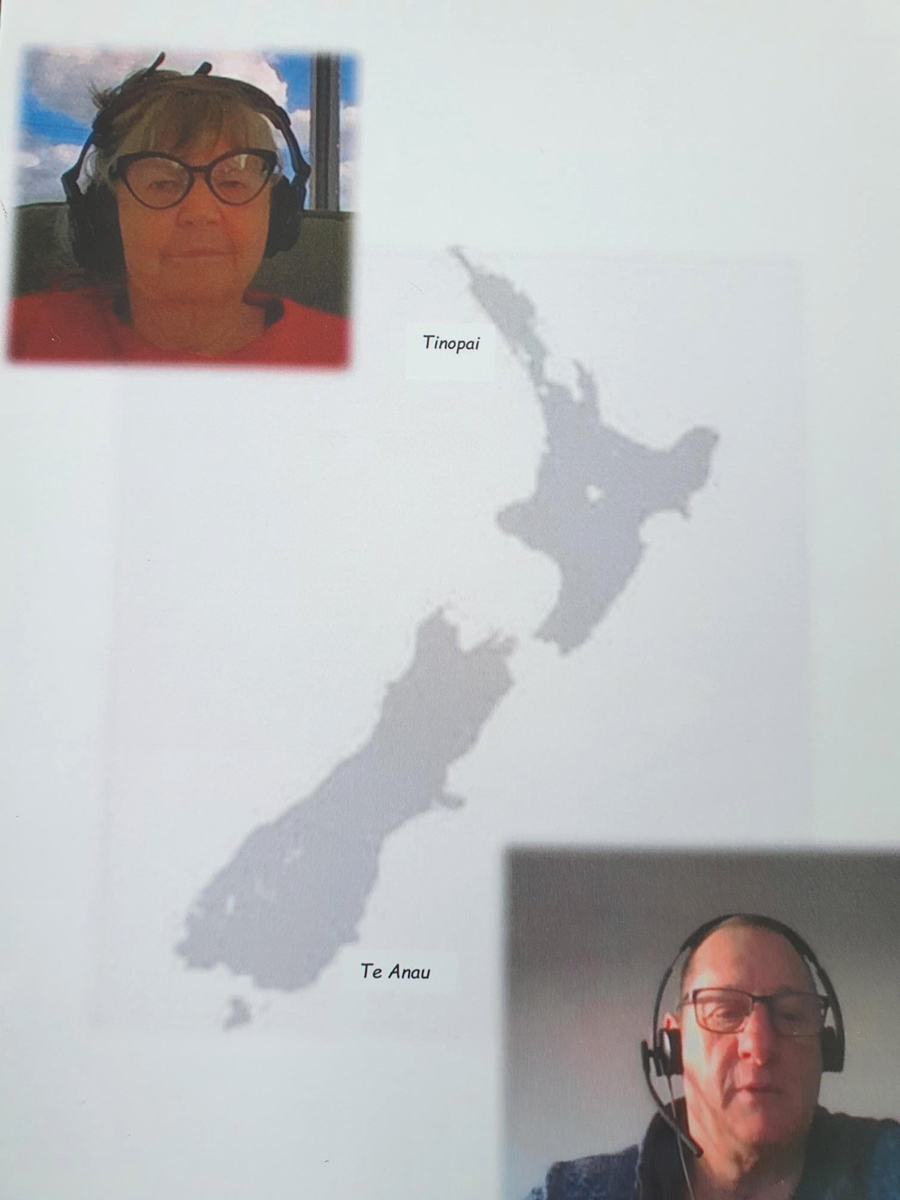
He started working with Linda Davies, a volunteer with the Rural Youth and Adult Literacy Trust. With Linda living in Tinopai on the Kaipara Harbour and Michael in Invercargill, you couldn’t find two people who live further apart, but Linda says using Google’s Classroom, Messenger and Meet, the two managed to not only make the relationship work, they made it thrive.
“I have been coaching and tutoring with the Rural Youth and Adult Literacy Trust for six years now and I have to say that Michael is my most committed learner. He initiated all the calls and learning sessions four times a week, usually at 7.00am. Michael just worked and worked and worked. He learned through sheer determination.”
Michael was tongue tied and stuttered when he was younger, which made his pronunciation difficult, and that subsequently made him nervous about reading and writing. When he finally received therapy to relieve his tongue-tie at age 12, he started to re-engage with learning. At that point he was told by his teachers that it was too late to learn.
Linda says they started the learning with basic sign words and then she would add in additional words that were relevant to Michael’s business and life.
“I largely used online school journals for reading, with a focus on the non-fiction stories that were more appropriate for an adult learner. Michael is now working at a level four or five reading stage, which shows how far he has come.”
Michael can’t speak highly enough of Linda. He says at all times she treated him like an adult and there was a great deal of trust between them.
Since sharing his story, Michael says it’s been a real eyeopener to realise that his reading and writing issues, which had been so shameful to him, are not a problem for anyone else.
“This was only my problem. People from all over the world have contacted me to let me know how much they love my story. It has been an honour and I feel very humbled by the feedback. It did take courage to come out and say that I can’t read and write, but if my story helps one other person overcome their embarrassment and ask for help, then it has been well worth it.”
As for Michael’s self-published picture book, copies are in hot demand. He wrote it to share with his family and it covers growing up in the deep south, his relationship with his father and what he got up to as a teenager, as well as his literacy journey.
We only printed a small number of books, Linda says, so the Rural Youth and Adult Literacy Trust is investigating to see if it can raise money for a reprint.
Linda and Michael are continuing their learning journey with twice weekly lessons.