
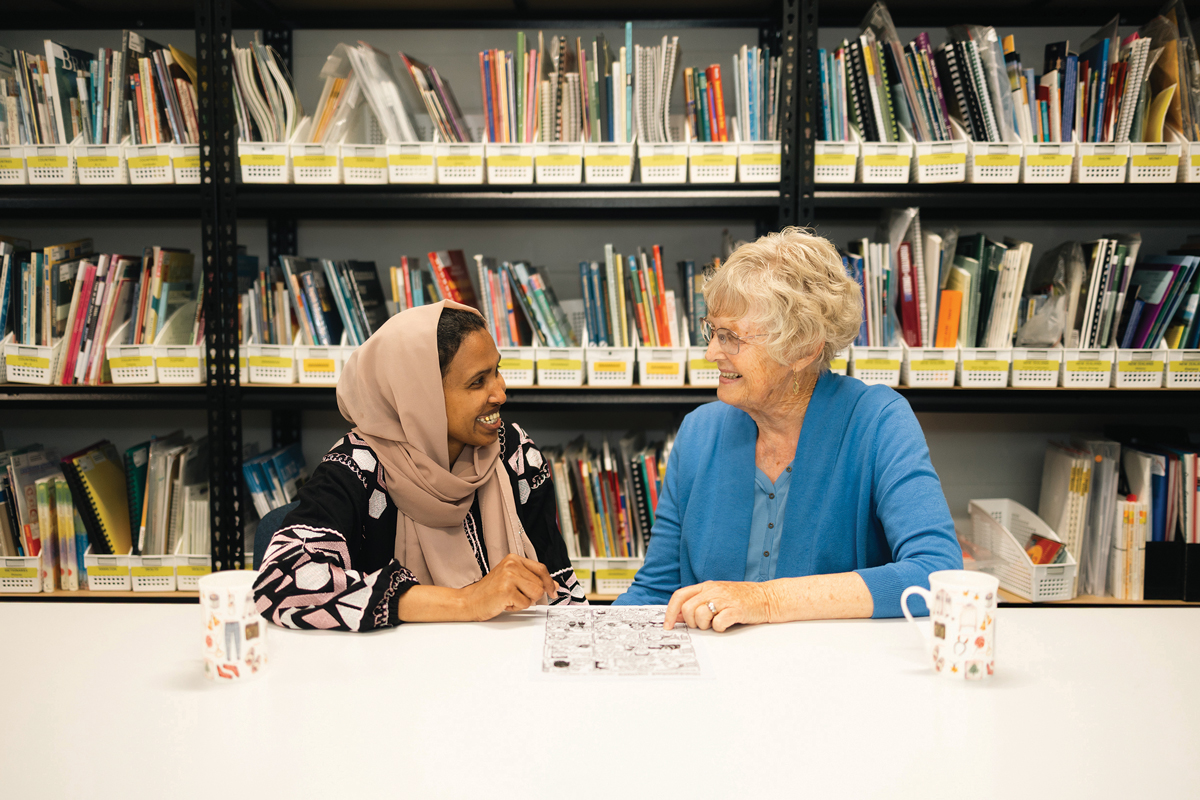
For many ethnic women in the Waikato, settling into life in Aotearoa New Zealand brings both opportunity and challenge. Adjusting to a new language, navigating unfamiliar systems, and managing the expectations of family and culture can be isolating experiences. In this space, Shama Ethnic Women’s Trust provides not only practical support but also a sense of belonging and purpose through community-based adult learning.
Founded in 2002, Shama was established in Hamilton to support ethnic women experiencing family violence. Over time, the organisation recognised that many of the women it worked with needed something broader. They needed a place to learn, to grow confidence, and to connect with others without having to leave behind their cultural identities. Today, Shama offers a wide range of programmes designed to equip women with essential life skills, strengthen families, and support wellbeing through education and connection.
Learning beyond the classroom
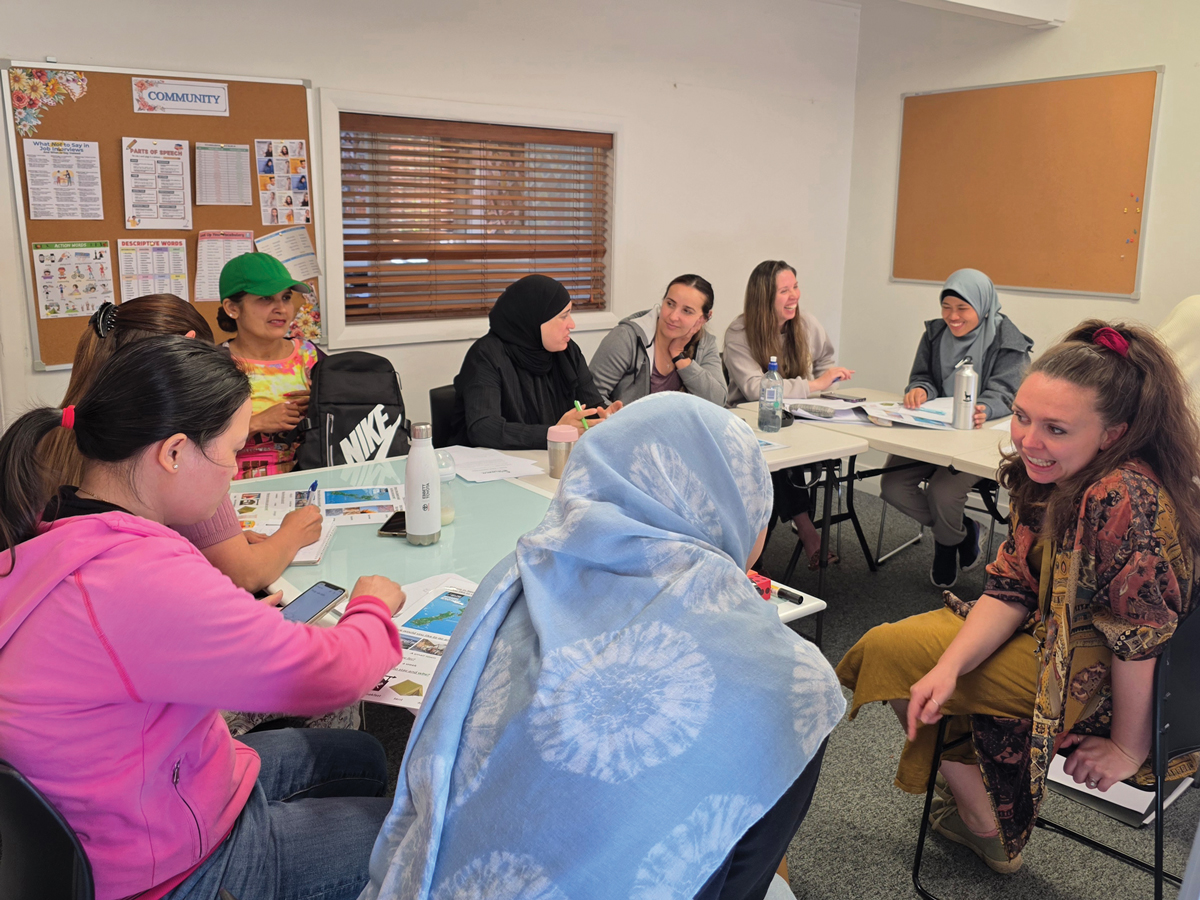
 Learning at Shama happens in kitchens, sewing rooms, and conversation circles. This is not a place of traditional, formal classrooms. English language classes, sewing lessons, and “Cooking and Conversation” sessions bring together women from many cultures who share a desire to learn and belong.
“Sometimes women say, ‘I already know how to cook,’” says Silvana Erenchun Perez, Shama’s Strategic Manager. “But the cooking classes are not about recipes. Classes are a relaxed, familiar place to practise English, celebrate culture, discover more about life in New Zealand, and learn from each other. They are a space where women share how things are done in their home countries, explore Kiwi ingredients, and swap ideas for blending flavours and traditions, like adding kumara to a curry”.
The “Cooking and Conversation” sessions often spark discussions about daily life from shopping and using public services to understanding school fundraisers and community events. Silvana recalls one of her early experiences as a new migrant from Chile, when she attended a school event that coincided with the Melbourne Cup. “I didn’t realise it was a dress-up occasion,” she says. “Everyone was very elegantly dressed, and I felt out of place. These are the kinds of experiences we talk about in our sessions, so that other women can feel more prepared and confident.”
Building skills and confidence
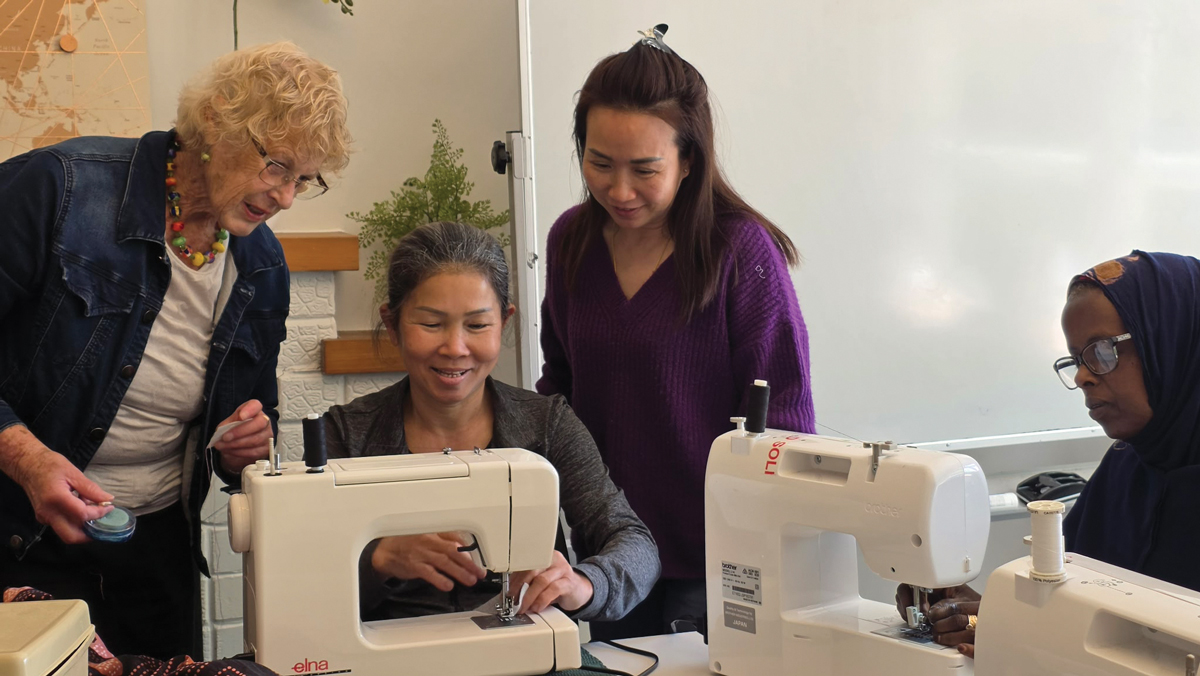
Shama’s life-skills courses also include sewing classes, which provide one-on-one tuition in using sewing machines, repairing clothes, and developing practical techniques that can lead to income opportunities or volunteering. These sessions help women learn by doing, with tutors guiding participants at their own pace.
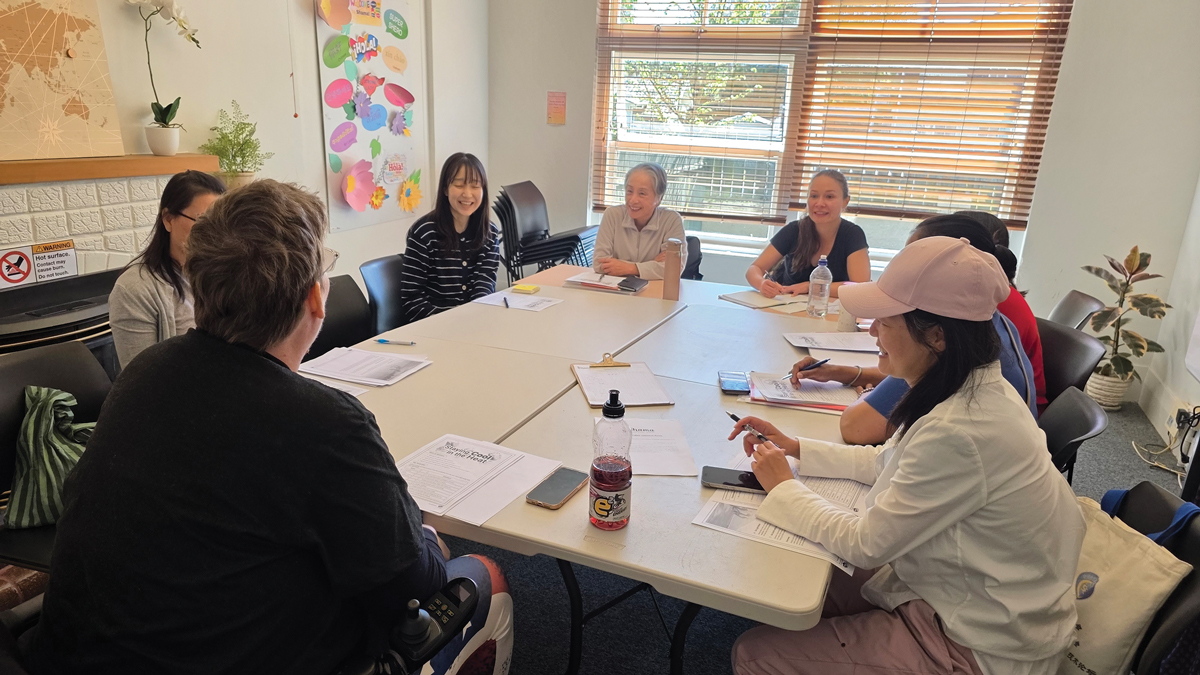
English language learning remains a cornerstone of Shama’s work. Around 30 women participate in each cycle of classes, divided into smaller groups by ability.
Because classes are women-only, they provide a culturally safe space for those who may not feel comfortable learning in mixed-gender environments. The emphasis is on communication for everyday life with the women practising conversations that happen at schools, shops, or workplaces and using the learning to build confidence to engage outside the classroom.
As Silvana notes, “It’s not just language learning, it’s also about learning how to participate in the community.”
The biennial Shama fashion show also helps the community engage more widely when over 200 garments are on show.
Learning as a pathway to participation
 The outcomes of these learning experiences are often transformative. Many participants begin as learners and go on to volunteer, tutor, or work within their communities. “It’s a progression we see often,” says Silvana. “Women come here unsure of their English or isolated at home. Over time, they start volunteering, which gives them new confidence and experience. Some move into employment in roles like teacher aides, interpreters, or community workers. It’s about regaining independence and having choices.”
Silvana’s own journey mirrors the experience of many of the women she now supports. After moving from Chile to Hamilton, she found herself at home with a young baby, far from the professional life she had built as a journalist. She joined Shama first as a participant in sewing classes, then volunteered as an interpreter, and later found part-time work in community radio. Eventually, she returned to Shama as a manager, where she continues to oversee its programmes today.
“Many migrant and refugee women come to New Zealand with strong qualifications and professional experience,” she says. “But when they arrive, their education is not always recognised, and their skills are not immediately trusted. Through Shama, they rebuild that sense of value and capability. They often rediscover the strong, capable women they already were.”
Expanding services and reach
Shama’s growth over the past 20 years reflects both the increasing diversity of the Waikato region and the ongoing need for culturally responsive education and support. In 2024, over 70 women participated in Shama’s life-skills programmes, and the organisation provided social and community support to more than 400 women. Its team of 17 staff members deliver social work, counselling, and administrative support alongside educational and community initiatives.
Beyond Hamilton, Shama also delivers violence prevention and healthy relationships training to ethnic community groups across New Zealand. The training is led by a full-time facilitator based in Auckland and is designed around best-practice approaches that respect cultural difference.
Each programme is tailored to the community it serves. For example, a recent workshop in Ōamaru partnered with the Waitaki Multicultural community to develop resources on healthy relationships for parents from migrant and refugee backgrounds. These materials were designed to help parents understand what their children are learning at school in Aotearoa, and to support them in discussing these sometimes sensitive topics in culturally meaningful ways.
Silvana notes that this approach of working alongside communities to codevelop solutions, is central to Shama’s philosophy. “It’s about prevention and education, not just response,” she says. “We work with groups to talk about consent, relationships, and cultural expectations in ways that make sense for them.”
Who comes through the doors
 The women and families who engage with Shama represent the diversity of Hamilton and the wider Waikato. Some are newly arrived migrants seeking connection and orientation. Others are mothers balancing childcare, work, and language learning. There are also survivors of violence and women rebuilding their lives, as well as those looking for community and a sense of belonging.
A community of trust and respect
While the tutors who lead Shama’s courses are mostly long-term New Zealand residents, the trust’s governance reflects the communities it serves. Most of Shama’s trustees are ethnic women who bring lived experience of migration, settlement, and cultural diversity. This balance ensures that programmes are grounded in both local knowledge and cultural understanding.
All of Shama’s courses are either free or offered at minimal cost, removing financial barriers to participation. This accessibility is essential for many women who may not yet be eligible for mainstream education funding or who face financial hardship.
The broader impact
Through its educational programmes, community outreach, and advocacy work, Shama acts as a bridge between cultures, helping women navigate life in Aotearoa while maintaining their individual cultural identity. The organisation’s model demonstrates how adult and community education can address social isolation, improve language and life skills, and strengthen social cohesion.
As Hamilton continues to grow in cultural diversity, Shama’s work remains vital. Its success shows that adult education is not limited to classrooms but is also about learning how to live, connect, and contribute in a new environment.
“Learning here is about connection,” says Silvana. “It’s about creating a space where women can support each other, share experiences, and build new lives together.”
Find out more at: shama.org.nz
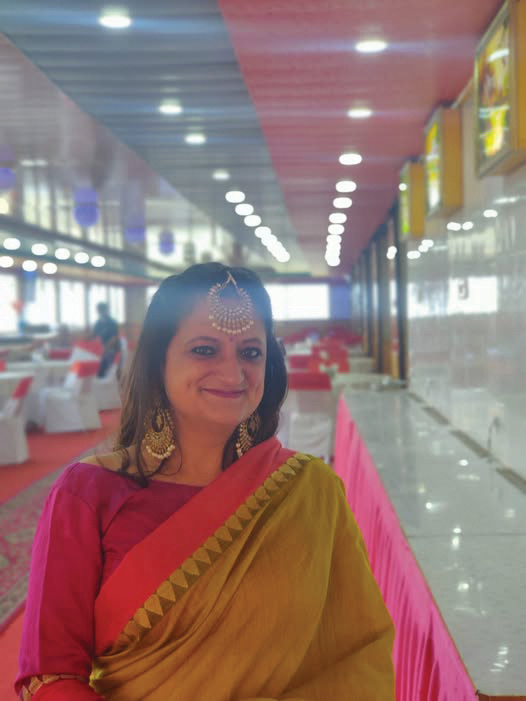 The following story is taken from Volunteering Waikato social media and tells the story of Rohini.
“My journey with Shama began shortly after arriving in New Zealand, during a time when I was seeking connection, purpose, and a way to contribute to my new community. With a background as a teacher in India, I was passionate about education and working with people, but starting over in a new country came with many challenges.
Volunteering at Shama gave me the opportunity to support English language classes for ethnic women—many of whom, like me, were navigating life in a new land. What began as a few hours of volunteering soon became something much more meaningful. Shama quickly felt like a home away from home—a place where I was welcomed, encouraged, and surrounded by women who uplifted and inspired one another.
Over time, I became involved in a range of activities, including assisting with community events and school holiday programs. These experiences allowed me to develop new skills, gain local experience, and connect with families from diverse backgrounds. Each moment deepened my sense of purpose and belonging.
Shama didn’t just give me a place to volunteer—it gave me confidence, a sense of direction, and a trusted support system. One of the most humbling moments in my journey was being nominated by Shama for the Volunteer Waikato Award. This recognition affirmed that my contributions were valued and made a difference.
With Shama’s support, I was able to transition into the workforce and am now working as a relief teacher in New Zealand. Having Shama as a local referee and a guiding presence gave me the courage and credibility, I needed to take that important step forward in my career.
I am grateful for the role Shama has played in my journey. The organisation’s work with ethnic women is not only empowering—it is life-changing. I take pride in my role here and deeply appreciate the opportunities to stay connected with Shama.”