

By Analiese Robertson, Director, ACE Aotearoa
We are in a workshop in South Auckland, for Pacific organisations wanting to learn how to apply for funding. Participants are put into small groups and asked to create a fictitious organisation and give it a name. They then discuss what they want money for and come up with a compelling proposal to present to a potential funder. What happens next is a role play, a panel of participants-turned-‘funders’ charged with making decisions about who gets the money, or not. By the end of the activity, participants are roaring with laughter yet thoughtful and intrigued at having this new perspective from the ‘other side’ of the funding application process. It was the same vibrant experience at a workshop in West Auckland two days earlier.
Our Auckland Pacific Capability Building Programme started in 2016 when Foundation North contracted ACE Aotearoa to help Pacific organisations learn how to apply – successfully – for funding. Now, five years on, we have worked with 150 Pacific organisations in Auckland and Northland, offering much more than funding application skills.
Many of the groups’ members have day jobs and are juggling work, family and social obligations whilst coordinating a community group voluntarily on the side. Others have inherited the responsibility and are now required to meet governance, management, and financial accountability requirements overnight. Most have landed in positions with good intentions and passion, but not always with the time, necessary skills, experience, prior training or relevant qualifications behind them. Add Covid-19 pressures (and for some communities, the impact of the recent volcano eruption in Tonga) and the demand for support is overwhelming.
We place Pacific values at the centre of our workshops – focusing on good relationships with the groups and applying a culturally responsive approach. The most frequently needed workshops have been on refining the vision, mission and strategic planning, governance, addressing legal status and compliance requirements – and financial management so they can apply for funding.
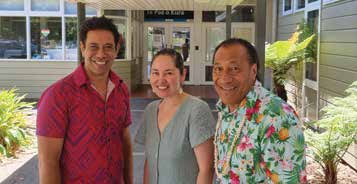 Our two facilitators, Pale Sauni and Sandy Harman together bring a perfect set of skills to the workshops. Pale is of Samoan heritage and a leading figure within the Pasifika community and ACE. He has a background in social development, health and the tertiary sector, with a focus on Pasifika transformative teaching and learning. Sandy, who joined the programme more recently, is of Pacific, Chinese and European heritage and has extensive experience working in education, government, and community funding and development.
On top of delivering the series of workshops, Pale and Sandy also provide access to tailored professional development, starting with a self-assessment of an organisation’s strengths and identifying areas for capability building. They aim to equip Pacific people running these not-for-profits with the core knowledge and tools they need to know about operating a successful community organisation through one-on-one mentoring and hands-on support. Each organisation works with Pale and Sandy to co-design a plan to tackle their priority areas for development.
In addition to the core team and service, ACE Aotearoa acts as a broker/link/referral/conduit, connecting groups to key services in the capability space. We have existing relationships with Foundation North, DIA Charities Services and Community Operations, Inland Revenue, Auckland North Community and Development (ANCAD), Auckland Community Accounting, Auckland Council, and Statistics New Zealand.
It has been through these partnerships that we have been able to connect communities and organisations directly to people who can help. At our first workshop together 70 groups registered during a single promotion week and we ran out of space in the car park and room! We have seen an attitudinal change from some of the agencies and organisations we work with, including a better understanding of the challenges for communities. So our interactive, Pacific-led workshops are shifting some of our Pasifika community groups from being reliant on information coming to them to becoming organisations that can search out all the information that they need and connect to staff and resources that can support them in a culturally safe way.
Statistics New Zealand, which was the most recent agency to present at our workshops, certainly added a new layer of skills and knowledge to participants’ toolkits. Our organisations need to know how to tell their story well and Stats New Zealand showed them how they could use data to support a compelling funding application. We’ve aways known that data is important – how powerful it can be – but it can be quite challenging pulling out the right information. They also talked about the support that they can provide to access the data and analyse it. “Just call us,” they said! The participants also received some useful postworkshop resources including links to free data, funding, policy and evaluation tools online.
The plan for 2022 will include a series of short-themed podcasts, an online digital access and funding talanoa planned for May, and additional themed workshops planned for June. Digital support is in fact one of the priorities of the programme’s current funder. Around the middle of last year, the NZ Lottery Grants Board gave ACE Aotearoa a Covid-19 Wellbeing grant which included the objective that organisations should become more familiar with basic digital tools and skills needed to operate more efficiently and access essential online information and resources and be better prepared to work in challenging, ever-evolving Covid-19 environment.
Pale and Sandy have also been invited to facilitate or provide support at collaborative community sessions about funding, governance, and other priorities for Pacific community groups. One such example is with Aotearoa Tongan Teachers’ Association (ATTA) After attending one of our workshops, ATTA reached out with a collaborative opportunity to run a community governance training session with ACE Aotearoa in Ōtāhuhu.