
In August 2020 West REAP was approached by a family whose son Tom has nonverbal autism. He was about to turn 20 and was leaving school in 2021. His parents were concerned because Idea Services had closed their workshop in Hokitika, leaving people with a disability without any support.
Julia Lavers, the Education Manager at West REAP, responded immediately:
“As a not-for-profit Community Education organisation, West REAP’s job is to find ways to meet community need. I’ve been a primary school teacher, so I got together with two other parents of children with a disability who are also in the education sector. We held a meeting at Idea Services in Greymouth with parents from both the Westland and Grey districts. It was overwhelmingly clear that there was a need in our community for a supported learner programme for adults who have intellectual, physical or behavioural disabilities.
 “We drew up an action plan with the goal of providing alternative activities in the community for those who would like to join a group of like-minded people. We decided that the focus would be on developing life skills, social skills, and making a move into independent living and job training.”
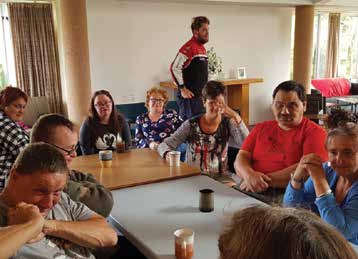
The club is held in a big church lounge which has a large kitchen the group can use. Each session cost $2.00 or $20.00 a term.
Linda Brake is the programme facilitator, and she says that attendance shows that there is a definite need:
“We were expecting five and got 16! Now we often have 20. Our members range between 20 and 70 years old, and from non-verbal to non-physical to fully capable. It’s surprising the friendships that have built up between them. They love coming. It’s become a close-knit community – like most clubs. And during the school holidays they miss each other. Our first session back turns into a big gossip session!
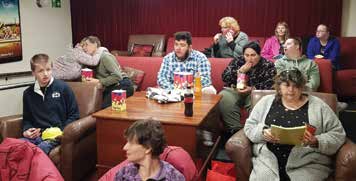
“I let them plan it. It’s their club. We sit around a big table, and they decide what they want to do next term. I make as much as I can possible. For example next term they want to go to Shanty Town and a swimming pool in Greymouth and have a picnic lunch. They love going to the movies and having fish and chip days.
“We do a lot of educational activities. We started with a first session on keeping yourself safe. I was really checking in with them that they did know what to do if, for example, someone offers them a lift. We have a Wildfoods Festival here in Hokitika and thousands of people come into the community. And we talk about hygiene and healthy eating. We have also talked about budgeting. About half of them are in group housing and spend a lot of their limited income on smokes and coke. With all the wet weather we have been having here they are often stuck inside, watching tv. They get stuck in a rut. So we talk about food and what’s good for you to eat. I encourage them to have healthier options.
 “Recently someone wanted to know how to tell whether they should iron a shirt, so we talked about the labels in clothing about ironing and washing instructions. Cooking is really popular, with everyone learning to make things like pizza and scones. We’re giving them some basic life skills.
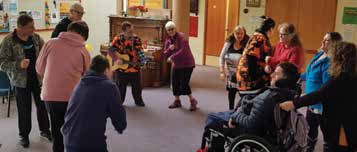
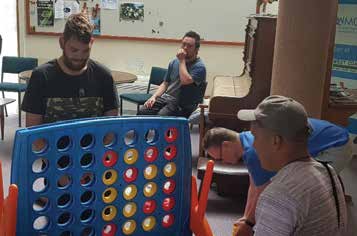
“And we do a lot of interactive activities – games, exercises, ball handling. They all help each other join in. A school group comes down and teaches them some dancing. And a woman comes in with instruments and we have a music session.
“I think they like having their own club. They have a real sense of belonging. I make it theirs, not mine.”
Three caregivers come with club members who need the support, and they help run the sessions. Suzanne Pooley is one of them. She has two of the young men who come each week.
“Both really enjoy it – the social aspect which is an important part of their week. They mix with their peers. Socially, you can’t put a price on it. You can see the value of social interaction – doing things together. One of them whose communication was not great, has improved out of sight. I think, if you are watching them, it is the freedom to be themselves. A lot of them are far more vocal now than when we started. Another young man was completely non-verbal at the start. Now he is trying to put two words together – to sound out words. This hasn’t happened before. It’s a forum that allows equality and openness. I think it is the group thing, that is working so well.
“I’m really talking about the younger generation. Not the older ones. They just want to be able to get out of the house and socialise, so the club manages to meet their needs too.
 “Next year I would like to see more opportunities for all of them to get out into the community. Recently one of the carers and I went out to lunch, and we were talking about how we could help some of them become more self-sufficient. Perhaps some voluntary work even if it’s like stacking wood with the Lions. That’s good for motor skills. They would be involved with the community, doing things that they enjoy doing together and learning things as they go. They could also help support the club financially.”
Taine Parker is one of the younger ones who attends every time. He’s testimony to Suzanne’s claim that the social opportunities that the club provides are priceless:
“I’ve made lots of new friends,” Taine says. “We go out socialising together. Sometimes I call them up and we go to the pub. Without the club I’d be bored all day. I don’t have many other activities during the week, I’m mostly with my family. Sammo is my best mate, he’s about the same age and we really get along. He lives nearby, but I hadn’t met him before.”