
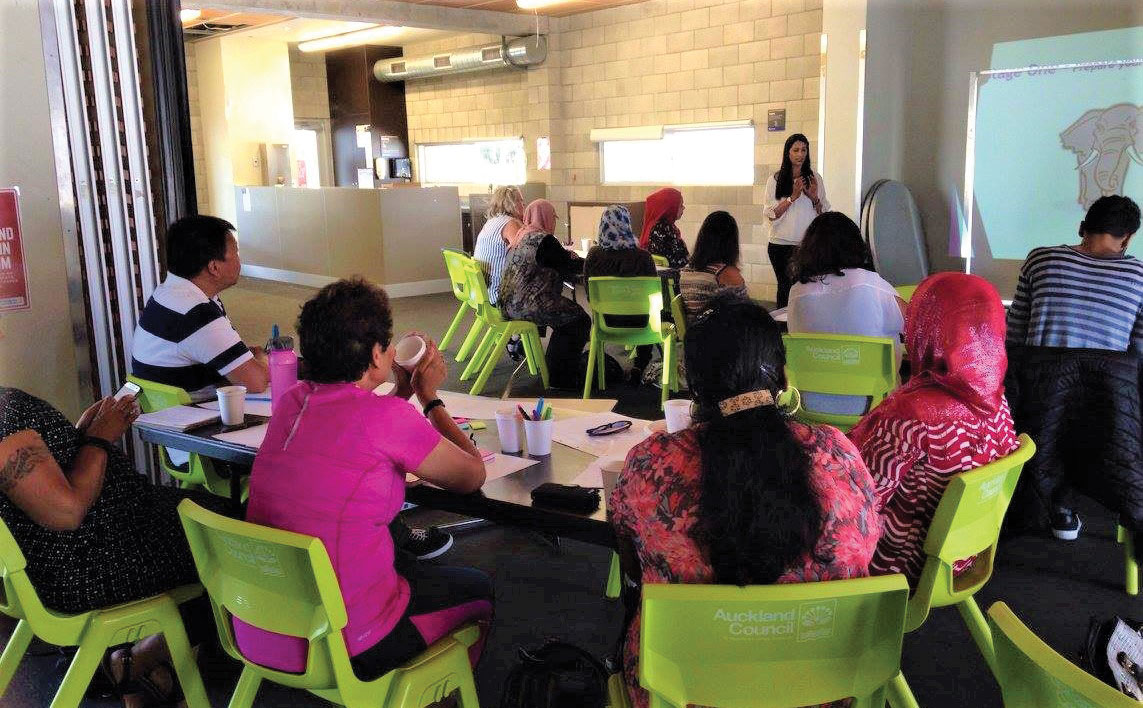
The Women’s Entrepreneurship Centre was established by Dr Sangeeta Karmokar six years ago and although Covid claimed the best part of two years, the Centre has provided education workshops for over five years and supported over 90 start-ups.
The large majority of participants are migrants or former refugees, who are, as the Centre’s website says, ’an underutilised source of talent.’
Women especially are under-represented in entrepreneurial roles, but as many women want to start up a family business with their husbands, men are welcome on the programmes too.
“Many migrants feel more comfortable running their own business rather than getting a job,” says Sangeeta. “Back home many of us have come from a family business, small or big. Those who come here with a recognised qualification can get a job, but for those without this, getting a job can be difficult. And language may be a barrier. But if they have done cooking or a craft at home, that can be easy and a safe bet.”
The Centre offers four programmes: Live your Dream, Digital Boost for SMEs, Co-Inspire and a new Business Planning course for MSD clients.
Live Your Dream is the most popular course. It is run every second Saturday over 12 weeks – and there are usually two programmes in a year.
Sangeeta explains how the programme works.
“Participants may come along with an idea of what they want to do, in which case they are guided through an assessment and planning process, including market and customer validation, delivery options, (such as having a shop or providing products online – or both) and financial stability. If they are ready to establish their business, we help them with legal and taxation requirements.
“The course that was run in the first part of 2022 had 15 participants, eight of whom have started a small business.
“Some of these are very small, like a painting business, or we had a man who was studying at MIT to become an electrician, and he plans to set up his own business, so we helped him with that.
“If they don’t know what they want to do, or if they have a few ideas, but they don’t know which one is best we help them identify the most viable.
“At the end of the course everyone has developed skills in setting up and running a small business including financial planning. Some, if they haven’t been able to settle on a business, come back when they have a clearer idea of what they want to do.
“The biggest shift we have seen recently is an increase in the number of people wanting to do our Digital Boost for SME’s course. During the lockdowns many businesses struggled so there’s been a huge growth in online businesses.
“Going online may be a way of getting orders, and we help people to transform their business to online. There are many Pakeha in this group. The course teaches online client management, payment and digital tools that will help them market their product. We had 25 apply for this course when we ran it in the first half of the year, but we had to cut that down to 20. We ran another in August. It’s a free online training workshop series (eight sessions in total) for small businesses and migrant start-ups to improve knowledge and use of digital technology, create confidence in digital literacy to manage personal information, and improve digital skills and creativity. We had many small business owners from diverse ethnicity who participated in these sessions.
“The Business Plan Coaching programme is in response to Work and Income’s grant for clients wanting to start their own business. So far, we have had six people come through this programme. They all leave with a fully completed business plan and the confidence to start their business.
Co-Inspire, says Sangeeta, is more like a meet-up than a workshop: “Most of the participants are migrants who don’t know the Auckland business landscape. We run an event every two months, and have people come and talk on different topics. It’s a place where people can hear about successful entrepreneurs, network with like-minded people – and collaborate.”
Collaboration is what Sangeeta thinks is needed – community wide.
“There’s huge potential in the migrant community, but if we all joined forces together, we can make a huge difference. We don’t need just more funding; we need more collaboration. Instead of competing for funding we could work together – ethnic organisations, local boards, social development organisations, professional development organisations. We need to join together.
“I will give you an example. When a woman suffers from domestic violence, instead of just sending her to a women’s refuge, she could come to a place like our centre, where she would be helped to become independent. Many women stay in violent relationships because they are not independent. We can help them change that. But collaboration is not happening because people fear that they will lose their funding.
“Maybe we need to be asked, by funders, to create a collaborative coalition. A group working together.”
The Women’s Entrepreneurship Centre has two full-time and two part-time staff. Sangeeta is part time. Her other job is as a Professor at the Auckland Institute of Technology where she teaches creative technology and entrepreneurship.